
What Investors Should Know About Fed Leadership Changes


The Federal Reserve helps keep the economy and financial system stable. This matters more in 2026 because Jerome Powell’s time as Fed Chair ends in May. The White House will choose a new leader, which could affect interest rates, the stock market, and your investments.
Many people wonder what role the Fed should play in the economy. Some think it should do more, while others think it should do less. These debates matter because they shape what the Fed does today and in the future. What do investors need to know as Fed news fills the headlines?
The Fed Does More Now Than It Used To
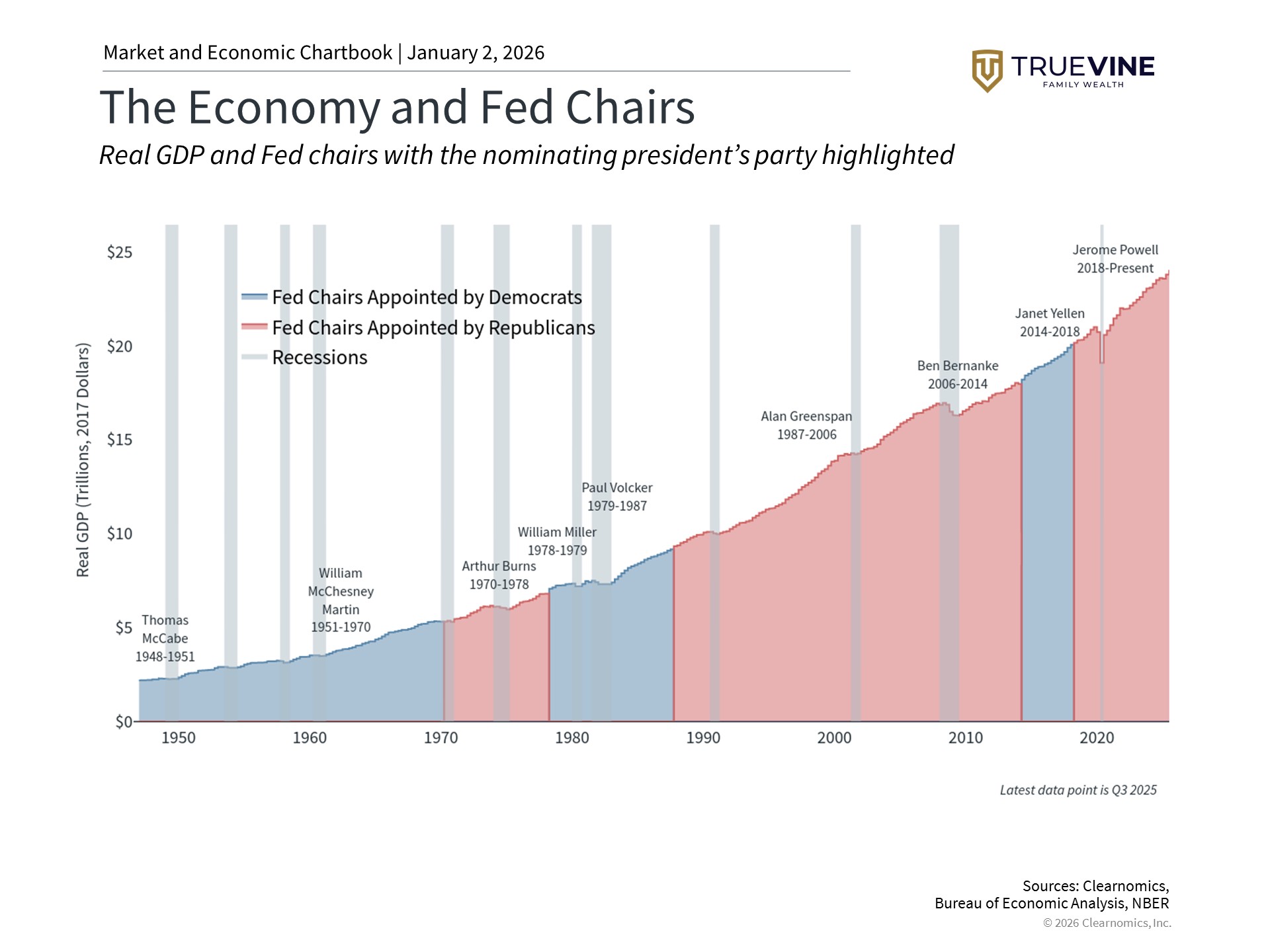
Congress created the Federal Reserve in 1913 to stop bank panics. Back then, people would rush to withdraw their money when they lost confidence in banks. This caused big problems for businesses and everyday Americans. The Fed was designed to prevent these crises by acting as a backup when banks needed help.
Today, the Fed does much more. In 1977, Congress told the Fed to focus on keeping employment high and prices stable. This is called the Fed’s “dual mandate.” Now the Fed tries to manage the whole economy, not just prevent bank panics. This is why so many people pay attention to the Fed’s interest rate decisions.
The Fed Makes Decisions Independent From Politics
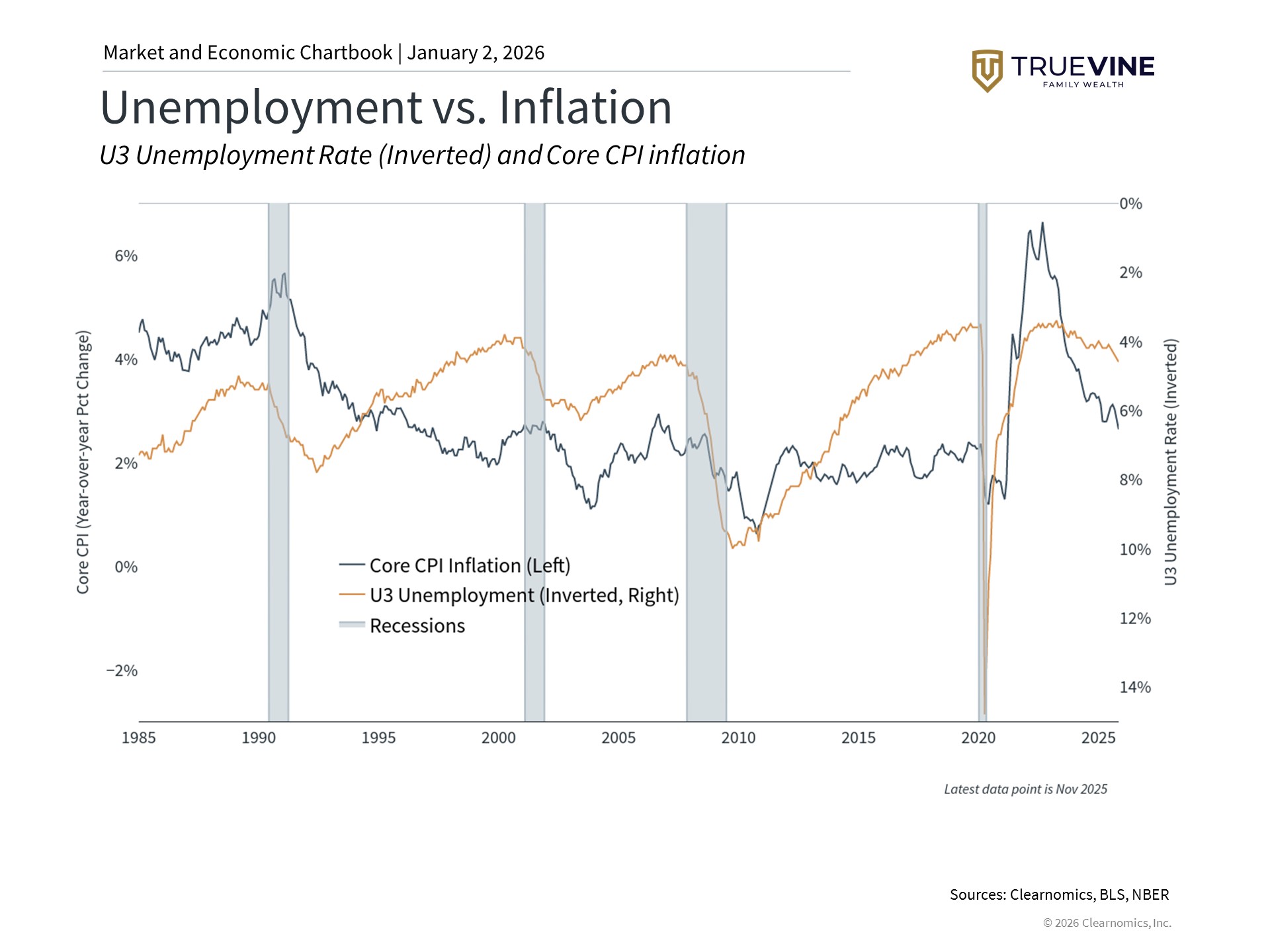
The president picks Fed officials and Congress approves them, but voters don’t elect them directly. Some people think this gives too much power to unelected officials. Others say the Fed needs this independence to make tough choices that help the economy over the long run, even if they’re unpopular in the short run.
The Fed doesn’t always get it right. It also has limited tools—mainly the ability to change short-term interest rates. This one tool can’t solve all economic problems like supply chain issues or trade uncertainty. The Fed influences the economy but doesn’t control it completely.
As a local Christian financial advisor in Naples, Florida, Aaron Pierce, founder of TrueVine Family Wealth, helps families navigate economic uncertainty with wisdom, clarity, and faith-based guidance. Aaron believes thoughtful financial planning should be grounded in both sound strategy and biblical stewardship, especially during times of market and policy change. Through a personal, relationship-driven approach, he serves clients across Southwest Florida with the goal of building lasting legacies that honor God and support future generations.
A New Fed Chair Will Be Chosen In 2026

The White House will likely name a new Fed Chair early in 2026. The chart above shows that the Fed may cut interest rates slowly over the next two years. The new Chair will probably prefer lower rates to support economic growth.
However, the Fed Chair is just one person on a committee of twelve voting members. The Chair needs to convince other members to support policy changes. Also, this isn’t the first time the Fed has changed leaders. The economy has grown steadily under different Fed Chairs from both political parties.
What matters most is whether Fed policy fits economic conditions. The Fed often reacts to unexpected events rather than directly controlling the economy.

This blog is published by TrueVine Family Wealth. The firm is registered as an investment adviser with the state of Florida and only conducts business in states where it is properly registered or is excluded from registration requirements. Registration is not an endorsement of the firm by securities regulators and does not mean the adviser has achieved a specific level of skill or ability. The firm is not engaged in the practice of law or accounting.
Information presented is believed to be factual and up-to-date, but we do not guarantee its accuracy and it should not be regarded as a complete analysis of any subjects discussed. All expressions of opinion reflect the judgment of the authors on the date of the post and are subject to change. Blog posts were prepared by Clearnomics, a third-party content provider.
You should consult with a professional advisor before implementing any strategies discussed. Content should not be viewed as an offer to buy or sell any of the securities mentioned or as legal or tax advice. You should always consult an attorney or tax professional regarding your specific legal or tax situation. Estate planning rules and regulations are subject to change at any time.
All investments have the potential for profit or loss. Different types of investments and strategies involve higher and lower levels of risk. There is no guarantee that a specific investment or strategy will be suitable or profitable for an investor’s portfolio. Asset allocation, rebalancing, and diversification will not necessarily improve a client’s returns and cannot eliminate the risk of investment losses.
Historical performance returns for investment indexes and/or categories, usually do not deduct transaction and/or custodial charges or an advisory fee, which would decrease historical performance results. There are no guarantees that an investor’s portfolio will match or outperform a specific benchmark. Historical returns do not represent the performance of TrueVine or any of its advisory clients.
Copyright (c) 2026 Clearnomics, Inc. All rights reserved. The information contained herein has been obtained from sources believed to be reliable, but is not necessarily complete and its accuracy cannot be guaranteed. No representation or warranty, express or implied, is made as to the fairness, accuracy, completeness, or correctness of the information and opinions contained herein. The views and the other information provided are subject to change without notice. All reports posted on or via www.clearnomics.com or any affiliated websites, applications, or services are issued without regard to the specific investment objectives, financial situation, or particular needs of any specific recipient and are not to be construed as a solicitation or an offer to buy or sell any securities or related financial instruments. Past performance is not necessarily a guide to future results. Company fundamentals and earnings may be mentioned occasionally, but should not be construed as a recommendation to buy, sell, or hold the company’s stock. Predictions, forecasts, and estimates for any and all markets should not be construed as recommendations to buy, sell, or hold any security–including mutual funds, futures contracts, and exchange traded funds, or any similar instruments. The text, images, and other materials contained or displayed in this report are proprietary to Clearnomics, Inc. and constitute valuable intellectual property. All unauthorized reproduction or other use of material from Clearnomics, Inc. shall be deemed willful infringement(s) of this copyright and other proprietary and intellectual property rights, including but not limited to, rights of privacy. Clearnomics, Inc. expressly reserves all rights in connection with its intellectual property, including without limitation the right to block the transfer of its products and services and/or to track usage thereof, through electronic tracking technology, and all other lawful means, now known or hereafter devised. Clearnomics, Inc. reserves the right, without further notice, to pursue to the fullest extent allowed by the law any and all criminal and civil remedies for the violation of its rights.