
How Equity Compensation Fits into Your Financial Plan


For many professionals, equity compensation — meaning shares of company stock given as part of your pay — has become a major way to build wealth over a career. Common forms include restricted stock units (RSUs, which are shares given to you after a waiting period), stock options (the right to buy shares at a set price), and restricted stock awards (RSAs).
However, this type of pay can be complicated to manage. Understanding how equity fits into your overall financial plan, and how to handle the risks that come with it, is key to making the most of it — whether you work for a small startup or a large public company. Reach out to TrueVine Family Wealth in Naples, FL to discuss your personal finances and develop a strategic plan to help you work towards your financial goals.
Equity compensation has grown more common over time. Companies like it because it saves cash while encouraging employees to stay and perform well. For employees, it offers a chance to share in the company’s success. In the 1990s, stock options became popular at startups, but many became worthless when the dot-com bubble burst. After that, companies — especially in tech — shifted toward RSUs, which hold some value even if the stock price drops. A recent survey by the National Association of Stock Plan Professionals (NASPP) and Deloitte showed that technology and life science companies grant RSUs to nearly 60% of their workforce.1
How To Value Your Equity Compensation
One challenge is figuring out what your equity is actually worth. Some people treat unvested shares as worthless, while others at fast-growing private companies may overvalue theirs based on the latest funding round. A balanced approach recognizes that equity has real value, but with some uncertainty. For shares in a public company, use the current market price. For shares in a private company, the most recent valuation is a useful guide, but may need to be adjusted downward because those shares are harder to sell and their value is less certain.
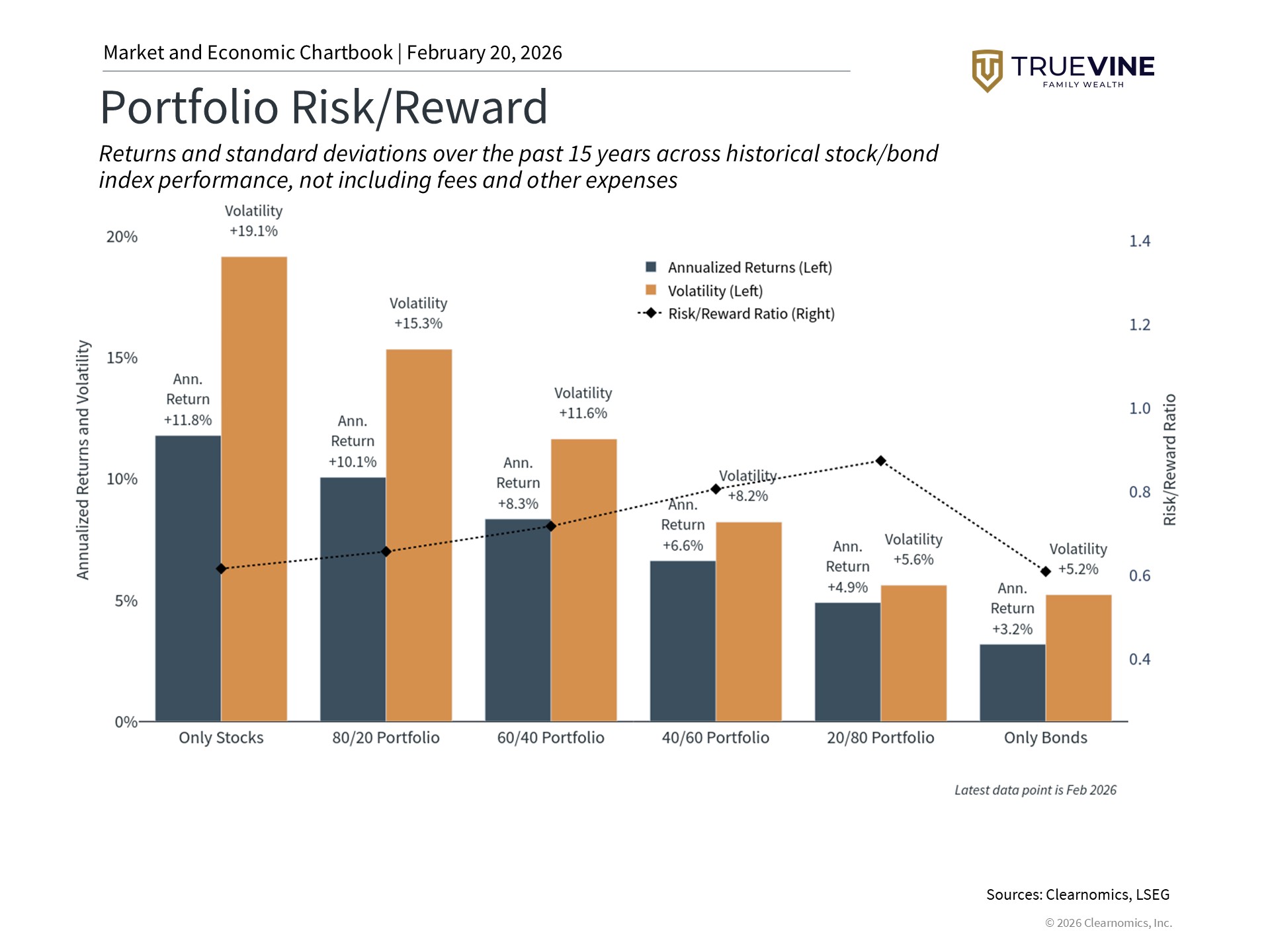
Managing Concentration Risk
A key concern with equity compensation is “concentration risk” — having too much of your wealth tied to one company’s stock. This is especially risky because your paycheck and your investments are both dependent on the same employer’s success. Here are some strategies that can help:
• Staged selling means committing to sell a set portion of your vested shares on a regular schedule. This removes emotion from the decision and slowly reduces your concentration over time. Rule 10b5-1 trading plans can help employees who face trading restrictions by automating sales in a way that complies with insider trading rules.
• Tax planning is important when selling a large amount of stock, since it can trigger a significant tax bill. Strategies like donating appreciated shares to a donor-advised fund (a charitable giving account) can provide a tax deduction and help reduce your exposure to a single stock.
• Keeping a cash reserve — a “liquidity sleeve” of cash and short-term bonds — ensures you have funds available for taxes or expenses without being forced to sell shares at the wrong time.
• Diversifying other accounts, such as your 401(k) or IRA, away from your employer’s industry can help balance out your overall exposure. For example, a tech employee with significant RSUs might want to hold fewer tech stocks in their retirement account. TrueVine Family Wealth in Naples, Florida is here to help you understand and navigate your family’s investments.
For very large concentrated positions, more advanced strategies may be available, though these typically require professional guidance given their complexity.
The goal is to build a comprehensive financial plan that makes the most of your equity compensation while keeping your overall portfolio aligned with your long-term goals.

References
1. https://www.naspp.com/blog/5-trends-in-full-value-awards
This blog is published by TrueVine Family Wealth. The firm is registered as an investment adviser with the state of Florida and only conducts business in states where it is properly registered or is excluded from registration requirements. Registration is not an endorsement of the firm by securities regulators and does not mean the adviser has achieved a specific level of skill or ability. The firm is not engaged in the practice of law or accounting.
Information presented is believed to be factual and up-to-date, but we do not guarantee its accuracy and it should not be regarded as a complete analysis of any subjects discussed. All expressions of opinion reflect the judgment of the authors on the date of the post and are subject to change. Blog posts were prepared by Clearnomics, a third-party content provider.
You should consult with a professional advisor before implementing any strategies discussed. Content should not be viewed as an offer to buy or sell any of the securities mentioned or as legal or tax advice. You should always consult an attorney or tax professional regarding your specific legal or tax situation. Estate planning rules and regulations are subject to change at any time.
All investments have the potential for profit or loss. Different types of investments and strategies involve higher and lower levels of risk. There is no guarantee that a specific investment or strategy will be suitable or profitable for an investor’s portfolio. Asset allocation, rebalancing, and diversification will not necessarily improve a client’s returns and cannot eliminate the risk of investment losses.
Historical performance returns for investment indexes and/or categories, usually do not deduct transaction and/or custodial charges or an advisory fee, which would decrease historical performance results. There are no guarantees that an investor’s portfolio will match or outperform a specific benchmark. Historical returns do not represent the performance of TrueVine or any of its advisory clients.
Copyright (c) 2026 Clearnomics, Inc. All rights reserved. The information contained herein has been obtained from sources believed to be reliable, but is not necessarily complete and its accuracy cannot be guaranteed. No representation or warranty, express or implied, is made as to the fairness, accuracy, completeness, or correctness of the information and opinions contained herein. The views and the other information provided are subject to change without notice. All reports posted on or via www.clearnomics.com or any affiliated websites, applications, or services are issued without regard to the specific investment objectives, financial situation, or particular needs of any specific recipient and are not to be construed as a solicitation or an offer to buy or sell any securities or related financial instruments. Past performance is not necessarily a guide to future results. Company fundamentals and earnings may be mentioned occasionally, but should not be construed as a recommendation to buy, sell, or hold the company’s stock. Predictions, forecasts, and estimates for any and all markets should not be construed as recommendations to buy, sell, or hold any security–including mutual funds, futures contracts, and exchange traded funds, or any similar instruments. The text, images, and other materials contained or displayed in this report are proprietary to Clearnomics, Inc. and constitute valuable intellectual property. All unauthorized reproduction or other use of material from Clearnomics, Inc. shall be deemed willful infringement(s) of this copyright and other proprietary and intellectual property rights, including but not limited to, rights of privacy. Clearnomics, Inc. expressly reserves all rights in connection with its intellectual property, including without limitation the right to block the transfer of its products and services and/or to track usage thereof, through electronic tracking technology, and all other lawful means, now known or hereafter devised. Clearnomics, Inc. reserves the right, without further notice, to pursue to the fullest extent allowed by the law any and all criminal and civil remedies for the violation of its rights.