
What Retirees Should Know About Medicare and Their Financial Future


For most retirees, healthcare is the biggest and least predictable cost in retirement, often totaling hundreds of thousands of dollars. Medicare is one of the main ways retirees cover these costs, making it a key part of any retirement financial plan. However, Medicare’s rules can be confusing, and understanding them is important for protecting your savings and managing your money throughout retirement.
Why Medicare matters
Medicare has been providing health coverage to Americans since it was signed into law in 1965. Today, it covers over 68 million people, including approximately 61 million adults aged 65 and older and 7 million younger people with disabilities.
1
As healthcare costs continue to rise, Medicare offers important financial relief for retirees who are often living on fixed incomes.
Medicare is divided into four parts. Part A covers hospital stays and is usually free for those who worked at least ten years. Part B covers doctor visits and outpatient care and requires a monthly premium. Part C, called Medicare Advantage, is offered by private insurance companies and can include extra benefits like dental, vision, and hearing. Part D covers prescription drugs and also requires a premium.
A common misunderstanding is that Medicare is entirely free because workers pay into it through payroll deductions. While Part A is free for most people, Part B premiums, supplemental coverage, and other out-of-pocket costs can still add up. This makes it important to plan for Medicare costs as part of your overall retirement budget.
The Medicare Income Cliff: Why Irmaa Planning Matters
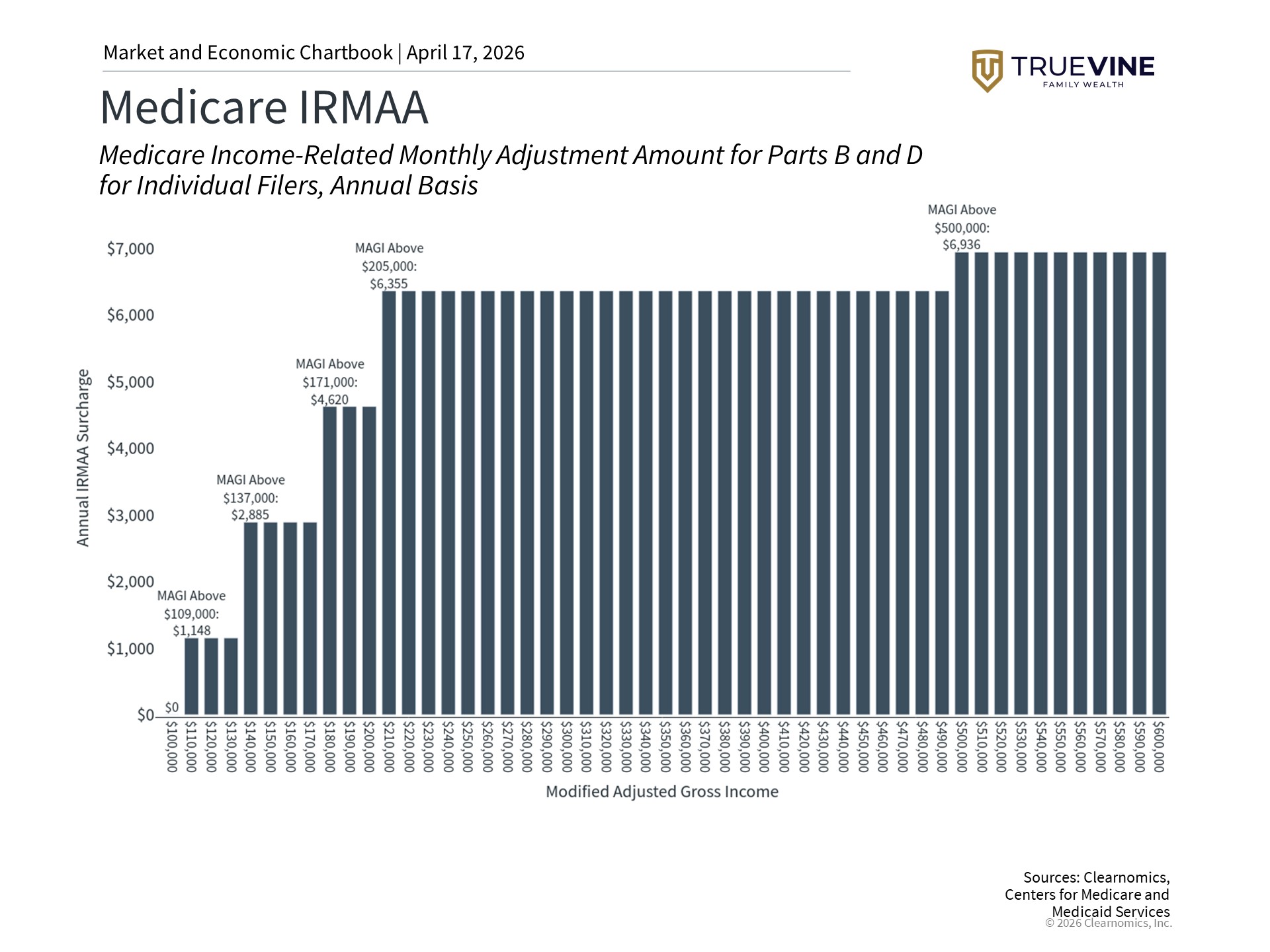
One of the biggest surprises for retirees is a charge called IRMAA, which stands for Income-Related Monthly Adjustment Amount. This is an extra fee added to Medicare Part B and Part D premiums for people who earn above a certain income. For 2026, this applies to individuals earning more than $109,000 or married couples earning more than $218,000 per year.
What makes IRMAA particularly tricky is how it works. Unlike regular income tax brackets, where only the income above a threshold is taxed at a higher rate, IRMAA works like a cliff. If your income goes even one dollar over a threshold, you pay a higher surcharge on your entire bracket. Also, the surcharge is based on your income from two years earlier, so decisions you make today can affect what you pay for Medicare down the road.
There are strategies to help manage this. For example, making charitable donations directly from a retirement account (called a Qualified Charitable Distribution) can reduce your taxable income without triggering higher IRMAA charges. Careful timing of Roth conversions (moving money from a traditional retirement account to a Roth account) can also help. These trade-offs show why retirement income planning often needs to look several years ahead.
Medigap Vs. Medicare Advantage

Another important decision is choosing between Medigap (also called Medicare Supplement Insurance) and Medicare Advantage. Medigap works alongside Original Medicare to help pay costs like deductibles and copayments. Monthly premiums are higher, ranging from roughly $32 to $550 depending on your plan and location, but your out-of-pocket costs are lower and easier to predict.
Medicare Advantage is an all-in-one alternative offered by private insurers. These plans often have low or no monthly premiums and may include dental, vision, and hearing benefits. However, they typically come with higher out-of-pocket costs, network restrictions, and referral requirements. It may also be difficult to switch back to a Medigap plan later due to medical underwriting requirements.
A TrueVine Family Wealth Southwest Florida financial planner who specializes in Christian financial planning can assist in assessing how different asset classes interact within a diversified portfolio.
Medigap tends to suit retirees who want predictable costs or who travel frequently, since it offers nationwide coverage. Medicare Advantage may appeal to those comfortable with variable costs who have savings set aside for healthcare. In 2025, the average beneficiary had 42 Medicare Advantage plans to choose from, highlighting the importance of reviewing options carefully each year.
Staying On Top Of Medicare Over Time
Medicare planning is not a one-time task. Plans, premiums, income levels, and health needs can all change year to year, so it is important to review your coverage regularly.
A few key points to keep in mind:
• Timing is critical.
Missing your Initial Enrollment Period, a seven-month window around your 65th birthday, can result in a permanent 10% penalty on Part B premiums for every year you delay, unless you qualify for a Special Enrollment Period through active employment.
• Medicare has limited long-term care coverage.
Many people are surprised to learn that Medicare only covers long-term care in very specific situations, such as following a qualifying hospital stay.
• Life changes can affect your costs.
Events like job loss, divorce, or the death of a spouse may reduce your income and potentially lower your IRMAA surcharges.
With the right planning, Medicare can be a powerful tool for a more secure retirement. The key is understanding how it works well before you need it.

References
This blog is published by TrueVine Family Wealth. The firm is registered as an investment adviser with the state of Florida and only conducts business in states where it is properly registered or is excluded from registration requirements. Registration is not an endorsement of the firm by securities regulators and does not mean the adviser has achieved a specific level of skill or ability. The firm is not engaged in the practice of law or accounting.
Information presented is believed to be factual and up-to-date, but we do not guarantee its accuracy and it should not be regarded as a complete analysis of any subjects discussed. All expressions of opinion reflect the judgment of the authors on the date of the post and are subject to change. Blog posts were prepared by Clearnomics, a third-party content provider.
You should consult with a professional advisor before implementing any strategies discussed. Content should not be viewed as an offer to buy or sell any of the securities mentioned or as legal or tax advice. You should always consult an attorney or tax professional regarding your specific legal or tax situation. Estate planning rules and regulations are subject to change at any time.
All investments have the potential for profit or loss. Different types of investments and strategies involve higher and lower levels of risk. There is no guarantee that a specific investment or strategy will be suitable or profitable for an investor’s portfolio. Asset allocation, rebalancing, and diversification will not necessarily improve a client’s returns and cannot eliminate the risk of investment losses.
Historical performance returns for investment indexes and/or categories, usually do not deduct transaction and/or custodial charges or an advisory fee, which would decrease historical performance results. There are no guarantees that an investor’s portfolio will match or outperform a specific benchmark. Historical returns do not represent the performance of TrueVine or any of its advisory clients.